|
||||||||||||||||||||||||||||
|
Harris Bros.
|
||||||||||||||||||||||||||||
|
Curriers
|
||||||||||||||||||||||||||||
|
||||||||||||||||||||||||||||
|
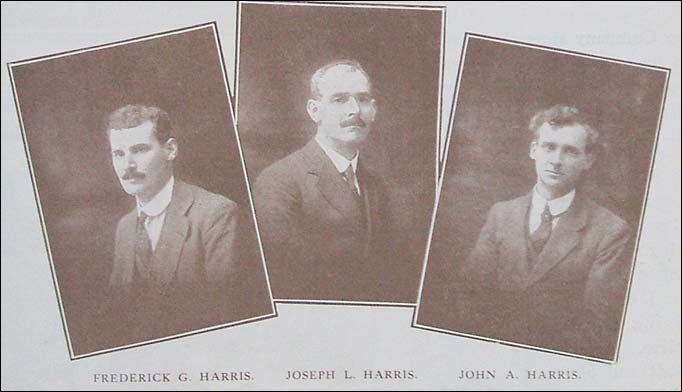
The business of Messrs. Harris Bros. was begun by Mr. Joseph L Harris in Higham Road, and moved to the Northampton Road premises in 1909, when Mr. Frederick G Harris and Mr. John A Harris joined their brother in partnership. They specialised in Semi-chrome Box Sides and High-grade Calf and Dull Sides, producing exceptionally good leather, and with a factory with all the latest and best appliances for leather manufacture. Personal supervision is one of the secrets of their success, and each department is controlled by one of the partners. Mr. Joseph does all the buying and sorting, Mr. Frederick attends to the selling, and Mr. John gives his attention to the clerical and financial side of the business, and handles all the finished goods. |
||||||||||||||||||||||||||||
|
||||||||||||||||||||||||||||
|
Fina News, Vol II, No.3, December 1951 Fina helps to make LEATHER FOR YOUR SHOES By Bryan Berry Photography by H. J. Hare
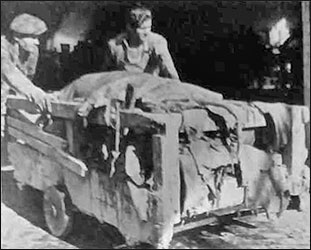
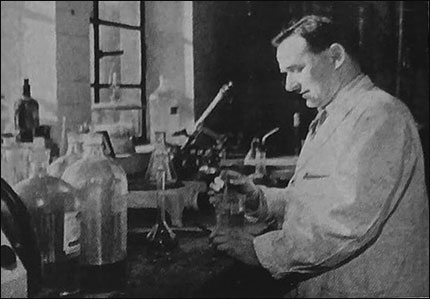
Situated in the heart of the leather district, this tannery deals with the manufacture of the supple leather which is used mainly for shoe uppers, not with the manufacture of the tougher sole leather, which is produced by vegertable tanning as opposed to the mineral (chrome) tanning used by Harris Brothers. We were immediately impressed by the self-sufficiency of the organisation. The firm has its own bricklayer, its own fitting shops in which tanning machinery can undergo running repairs ; pumps its own water from its wells and produces its own power, heating and electric light. Between 120 and 150 men are employed, working two shifts, from 7.30 a.m. to 5.45 p.m. and from 6 p.m. until 2 a.m., and there is a large, well equipped canteen and recreation room, with modem kitchens. We were shown round the tannery by Ted Harris, leather chemist, who explained the whole process of the tanning to us. We saw how the hides arrive, having been bought at one of the big auctions at London, Bristol, Manchester or Birmingham. Some are home-produced hides, but more frequently African or South American. British hides are preferred because they yield a more natural type of leather, but there are not nearly enough cattle in Britain to keep the industry supplied with British hides.
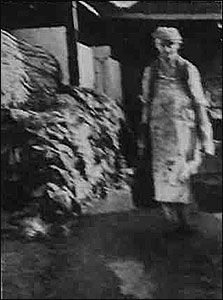
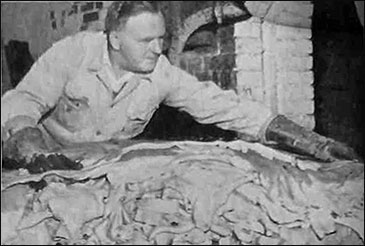
On arrival all hides go to the salting sheds where they are piled up with layers of salt between as a preservative measure. Ted Harris told us that hides will keep in salt for anything from six months to a year. To give us some idea of the size of this operation, they told us that they use about two tons of salt per day, and always keep six months' supply of salted hides in the sheds in case deliveries are held up.
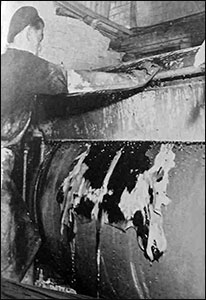
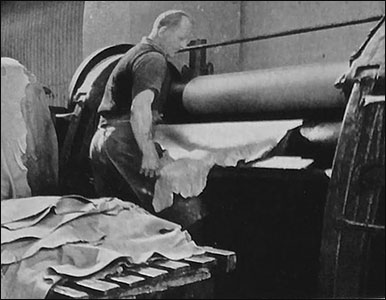
When the hides come out of storage they are soaked in water for 24 hours, and then soaked in a solution of lime and sodium sulphide to remove the underskin or epidermis. This "liming" lasts for three days and by the time they are taken out of the solution the hair and flesh is quite loose. "Fleshing" comes next; this is the term used for the scraping away of the flesh still adhering to the hide, and is done by machine. The waste flesh is dispatched for conversion into glue. We were told that they fin three railway wagons a week with the flesh. The hair has been loosened by the lime soaking and when the hide is passed through the "unhairing" machine which resembles a giant mangle, the hair comes away easily.
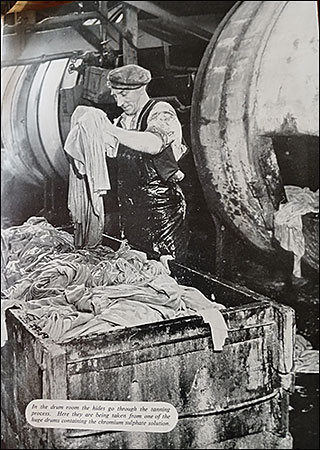
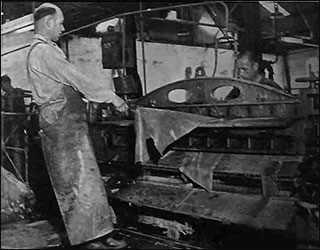
Next the hides must be split. They are split down the centre, separating the once hairy side, called the "grain", from the once fleshy side, called the "split". The first is ordinary grain leather and the second suede. The splits and grains now go into the great revolving drums in which the actual process of tanning is carried on. In these drums they are washed free of lime and soaked in chemical solutions to remove impurities. Next they are impregnated with a chromium sulphate solution which forms the actual tannage.
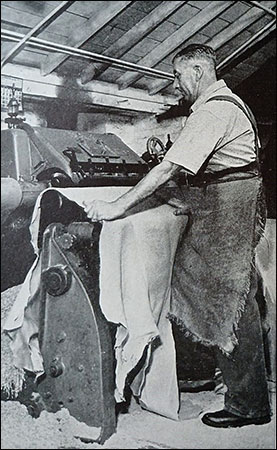
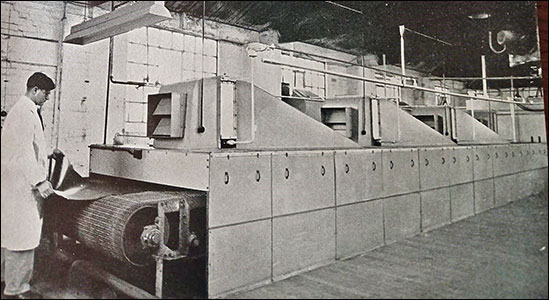
The leather is now dry and hard and has to be conditioned before going to the staking machine for softening. This machine is really a piston arm with a grab hand on the end which snatches at the leather as the operator feeds it in, bit by bit, turning it this way and that to ensure that the whole surface gets a good going-over. To the layman this process looks formidable, for the operator must stand almost on top of the giant threshing arm in order to feed the leather in, and one blow from an arm like that would put Sugar Ray Robinson in the shade. The hides are now ready to go through the Sheridon embossing machine which raises a pattern on the upper part of the hide. Not all the hides are embossed, but leather for army boots, wallets and other fancy goods have a pattern stamped on them. Leather "finishing" is the most specialised and least smelly of all the tanning processes—and a tannery must be smelt to be believed! "Finishing" includes the application of surface dyes, fixatives and that pleasant, shiny look you see on a new pair of shoes. The leather is first dyed after the tanning process, but the surface dye is applied after all the drying and taking has taken place. We saw the Harris Brothers' nishing machine in action. This is a new machine, f which the firm is justly proud, and operates on a travelling belt principle which takes the hides slowly through a variety of processes. First the hides are sprayed with a surface dye, then with a mixture of pigment, then with two more coatings of the pigment and finally a coating of formaldehyde fixative ; all the spraying is automatic. The hides then pass under radiant heat, through another heating chamber, and emerge dried and finished.
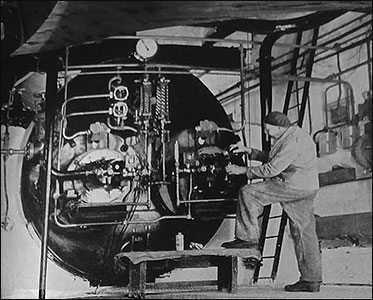
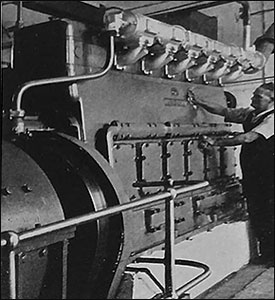
On leaving the finishing department, we were shown the engine rooms where diesels, using FINA diesel oil, produce the power for every machine In the tannery. We also saw the big fuel tanks and the oil-burning furnaces, and were proud to learn once again how FINA fuels play their part in the great industries of the country.
A fire in the 1960s. |
||||||||||||||||||||||||||||
|